Every organisation goes through moments of change. Launching something new, scaling up, entering new markets or repositioning to stay relevant and right now, those moments aren’t occasional, they’re constant. External pressures, shifting audiences, new technologies… the ground keeps moving.
But there’s one thing we still see underestimated time and time again. The role of communications in making change land well. We recently ran a poll on LinkedIn asking a simple question:
How well prepared are you to navigate change from a communications perspective?
The results were telling.
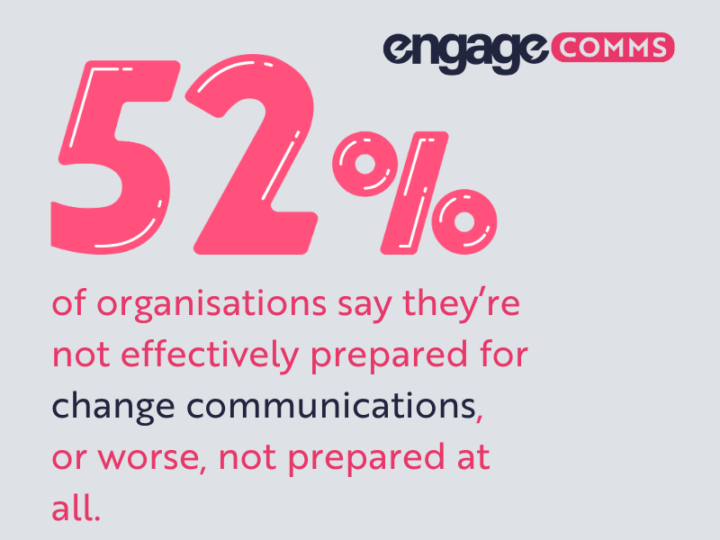
- 28% said they had a very well-prepared, strategic approach
- 20% felt quite well prepared, but more in the short term
- 40% said they were OK, but it could be better
- 12% admitted they weren’t prepared at all
So while less than 30% feel confident, the majority are somewhere in the middle, or worse, on the back foot.
Effective comms during change isn’t just about sending updates or announcing decisions. It’s about helping people understand what’s happening, why it matters, and what it means for them, whether that’s employees, customers, partners or stakeholders.
When that’s done well, change builds momentum. When it’s not, you get confusion, resistance, or worse, disengagement. What we see in practice is that comms too often gets brought in slightly too late or treated as a layer to add on once the “real” decisions have been made. But by that point, you’re already playing catch-up.
The organisations navigating change most effectively tend to take a different approach. They put comms at the centre from the start. They think about narrative early, invest in clarity and maintain consistency. They also make sure they’ve got the right expertise in place to keep things moving when it matters most.
The takeaway from the poll isn’t that organisations don’t care about comms. It’s that many know they could be doing it better and right now, “better” isn’t a nice-to-have. It’s the difference between change that lands and change that gets lost.
If there’s one thing we’re seeing again and again, it’s this. Communications isn’t a support function during change, it’s a critical driver of whether that change succeeds.